.webp&w=3840&q=75&dpl=dpl_8yJedLFfAoYM8LyjDYKUb3V688NW)
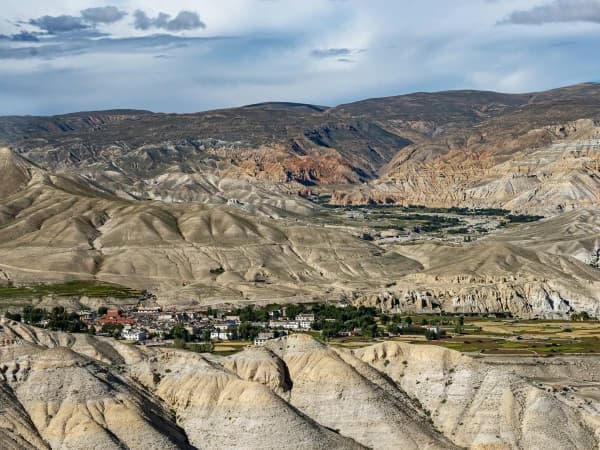
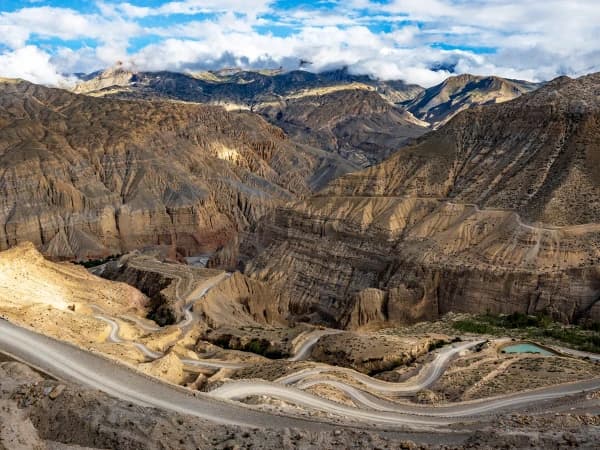
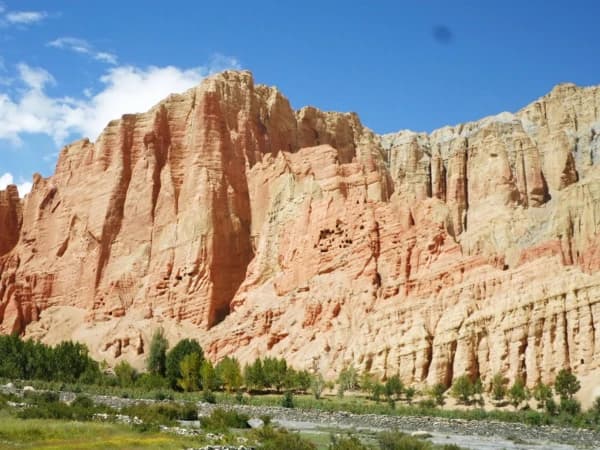
The Upper Mustang Trek is a journey into a hidden kingdom, a mystical desert-like region in the northern part of Nepal that was once a restricted area. Often called the “Last Forbidden Kingdom,” Upper Mustang offers a rare glimpse of Tibetan-influenced culture, ancient monasteries, and red-walled villages that seem untouched by time. This trek combines high desert scenery, rugged cliffs, deep gorges, and colorful Tibetan art with the warm hospitality of local people who have preserved their traditions for centuries.
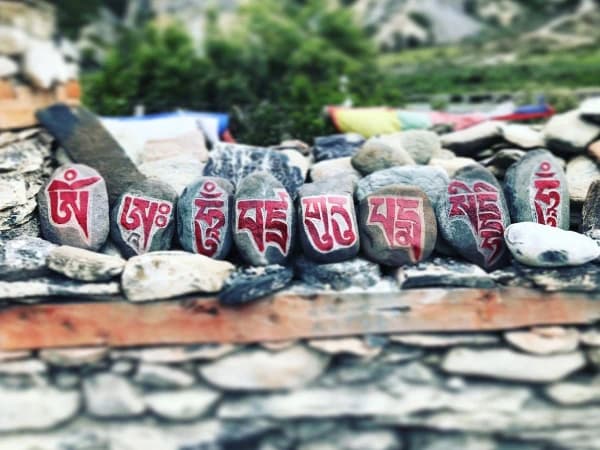
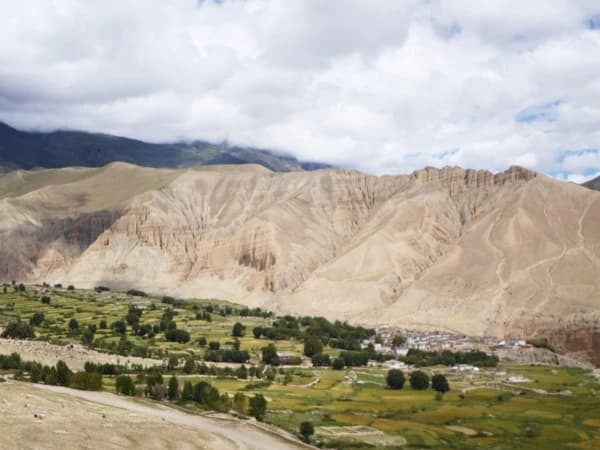
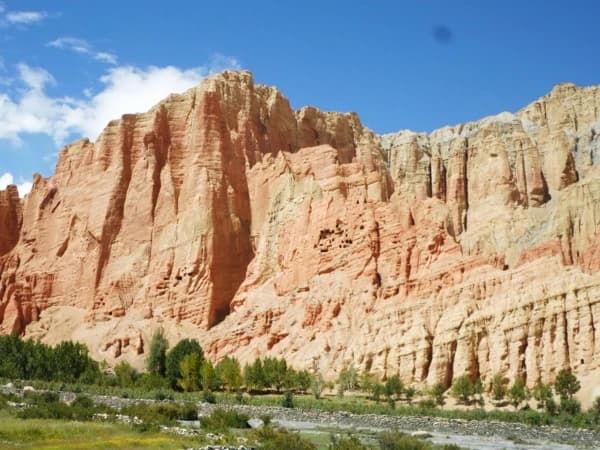
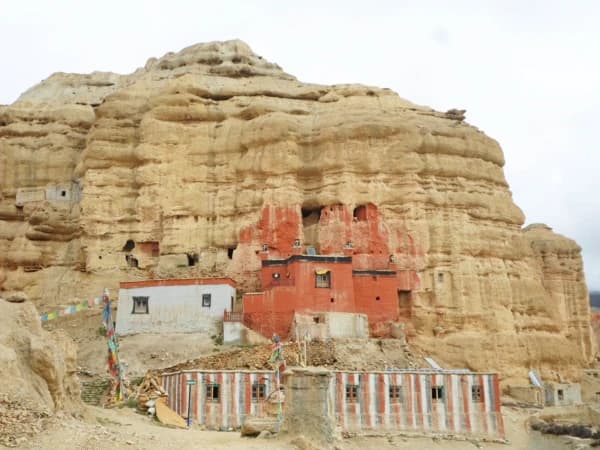
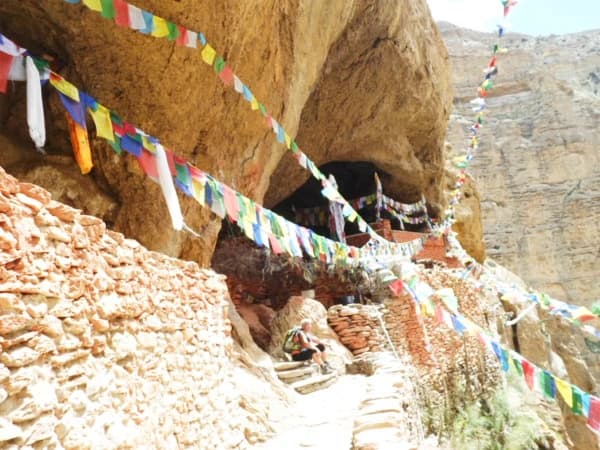
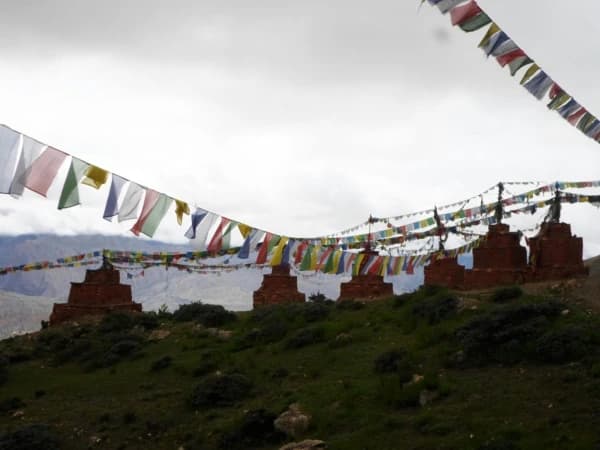
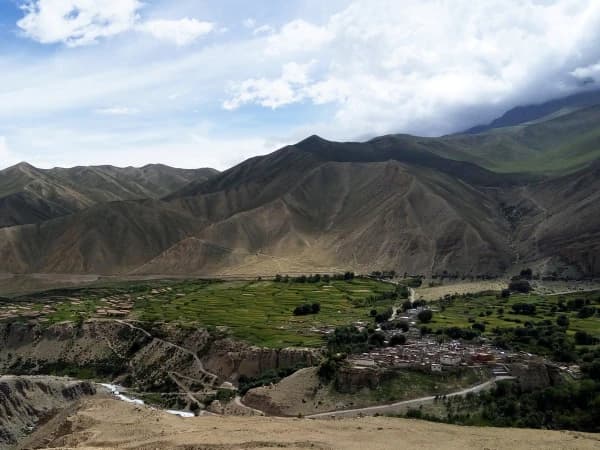
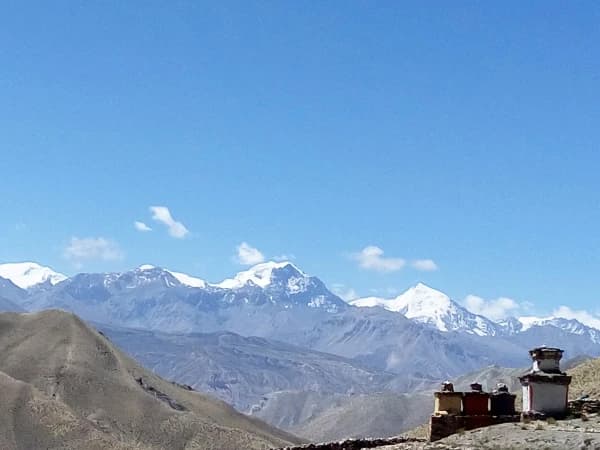
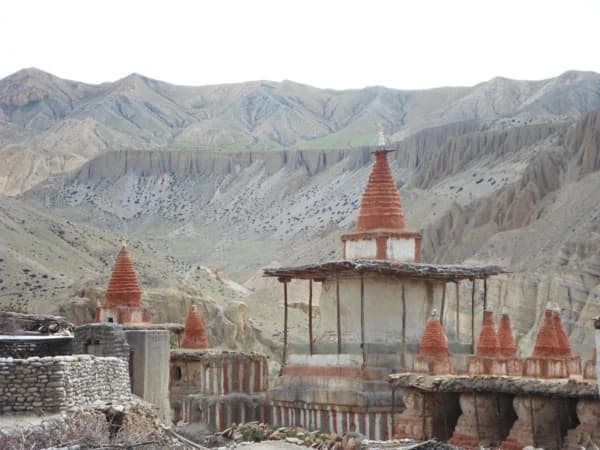
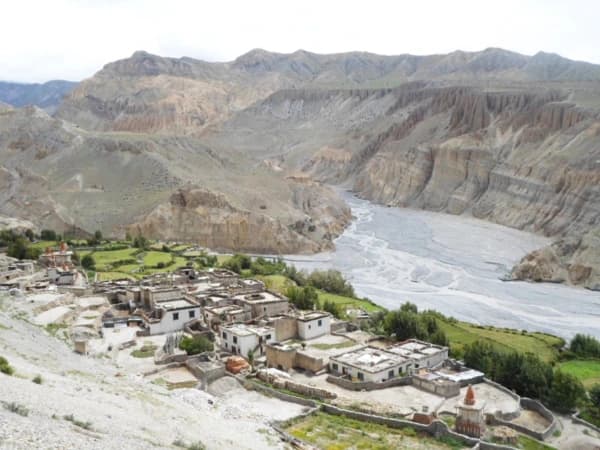
The trail traverses the arid landscapes of Mustang, following trails lined with prayer flags, mud-brick houses, and caves that were once dwellings of monks and hermits. Highlights include Lo Manthang, the walled capital city of Upper Mustang; ancient gompas (monasteries); and stunning desert valleys surrounded by snow-capped Himalayan peaks. Trekking here feels like stepping back in time; every village and canyon tells a story of resilience, spirituality, and harmony with nature.
Because of its remote location and high-altitude desert terrain, the Upper Mustang Trek is moderately challenging. It is suitable for trekkers with a reasonable level of fitness, and curiosity about Tibetan culture and history. The trail is well-marked, and accommodations range from traditional lodges to basic teahouses, offering hearty meals and warm hospitality along the way.
Highlights
- Explore the walled city of Lo Manthang, a living museum of Tibetan culture and architecture.
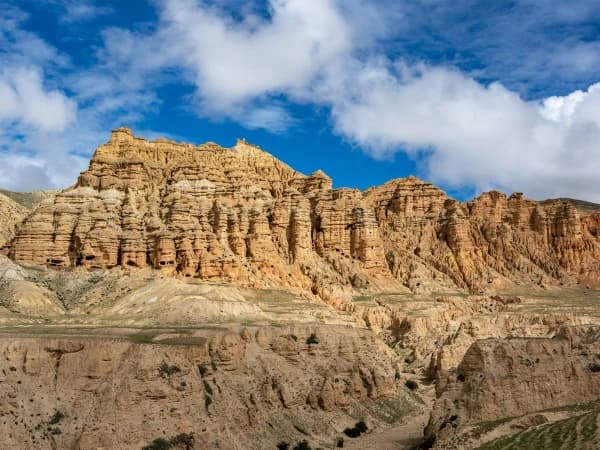
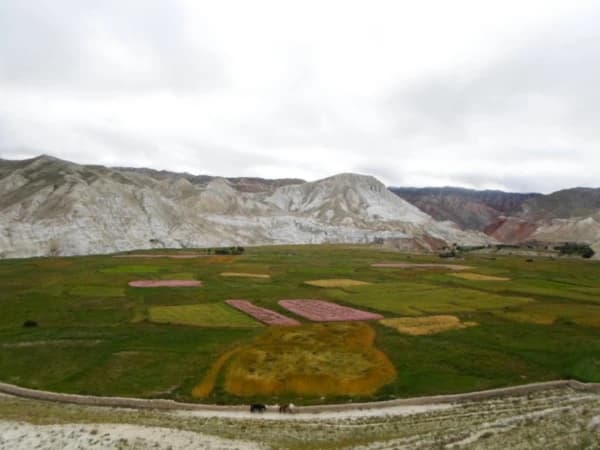
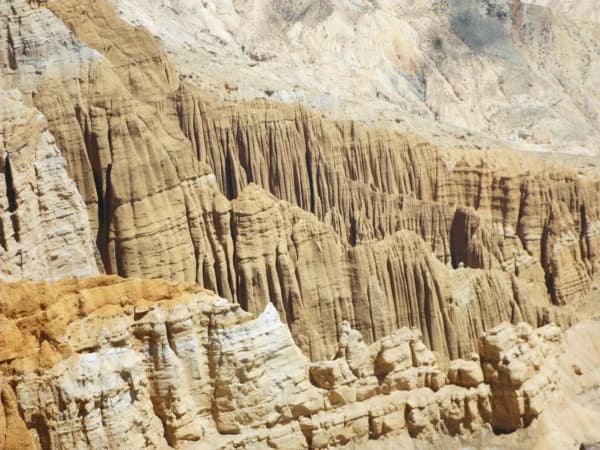
- Walk through arid desert valleys with dramatic cliffs, deep gorges, and colorful landscapes.
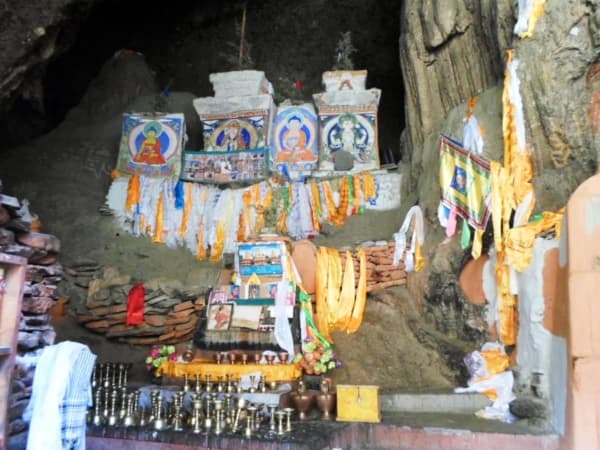
- Visit ancient monasteries and sacred caves, some with centuries-old murals and artifacts.
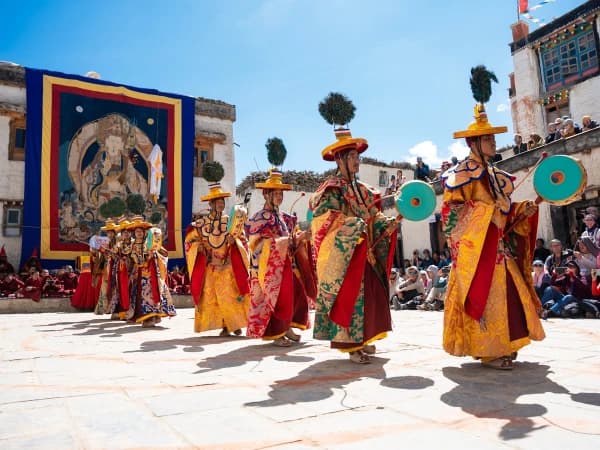
- Experience the unique Mustang culture, with its Tibetan-influenced customs, festivals, and lifestyle.
- Witness breathtaking views of the Annapurna and Dhaulagiri ranges from remote vantage points.
- Observe rare wildlife, including blue sheep and Himalayan vultures, in their natural habitat.
What Can I Expect from the Upper Mustang Trek?
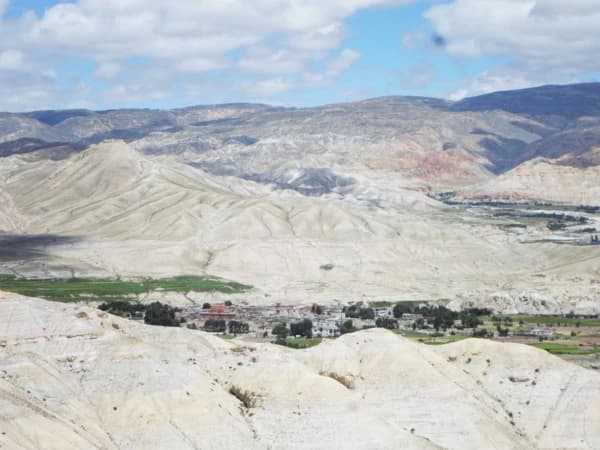
This trek is a blend of cultural immersion and high-altitude desert trekking. Unlike the lush forests of central Nepal, Upper Mustang is dry and arid, with striking red cliffs, wind-carved landscapes, and isolated settlements. The altitude ranges from 2,800m to 4,200m, allowing trekkers to experience high desert terrain without extreme acclimatization risks.
Each day brings new landscapes, villages, and cultural encounters: yak caravans crossing high passes, children waving from mud-brick schools, and monks performing ancient rituals in monasteries. Trekkers will pass through narrow gorges, open plains, and windy ridges, all while being embraced by the warm smiles of the Mustang locals.
Major Attractions of the Upper Mustang Trek
Your journey begins in Kathmandu, where you can explore the vibrant culture, historic temples, and bustling markets. After flying or driving to Pokhara, a short domestic flight to Jomsom brings you closer to the arid Mustang region.
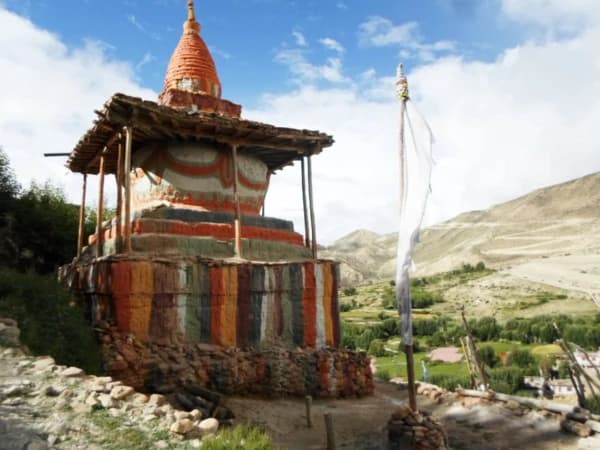
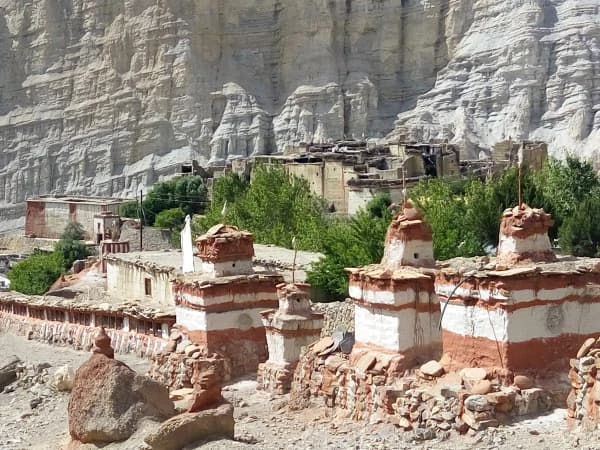
From Kagbeni, the gateway to Upper Mustang, you’ll traverse the Kali Gandaki valley and follow ancient trade routes used by Tibetan caravans. Along the trail, villages like Chele, Ghami, and Tsarang reveal centuries-old architecture, chortens, and prayer flags fluttering against the sky. At Lo Manthang, the walled city offers a unique glimpse into the life of a traditional Tibetan kingdom, with its narrow streets, monasteries, and royal palace.
This trek is ideal for travelers seeking a remote adventure with rich cultural experiences, breathtaking desert landscapes, and opportunities for photography and exploration.
Who Can Do the Upper Mustang Trek?
The trek is suitable for moderately fit travelers, solo adventurers, couples, and small groups. Daily walks are typically 5–7 hours, with some steep ascents and descents. Although no technical climbing skills are needed, a good level of fitness and mental preparation for isolation and dry conditions are recommended.
Iconic Himalaya welcomes enthusiastic trekkers from all over the world — whether you’re travelling solo, with friends, your partner, or family. Solo trekkers are always accompanied by a licensed guide and, if preferred, a porter. You can also join a group trek with other travellers or arrange a private trek. Iconic Himalaya will adjust your itinerary and travel arrangements as per your preference.