Ama Dablam Base Camp Trek

Ama Dablam Base Camp Trek
Duration
13 Days
Trip Grade
Strenuous
Country
Nepal
Maximum Altitude
4,600 m.| 14,02 ft.
Group Size
1 to 14 People
Starts/Ends
Lukla - Lukla
Communication
Phone and WiFi
Activities
Trekking
Best Time
Autumn and Spring

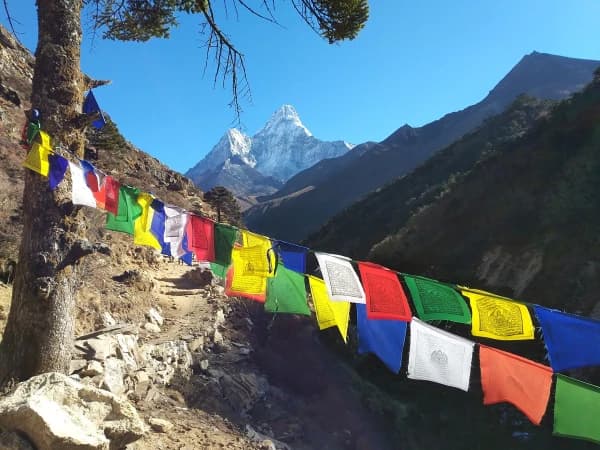
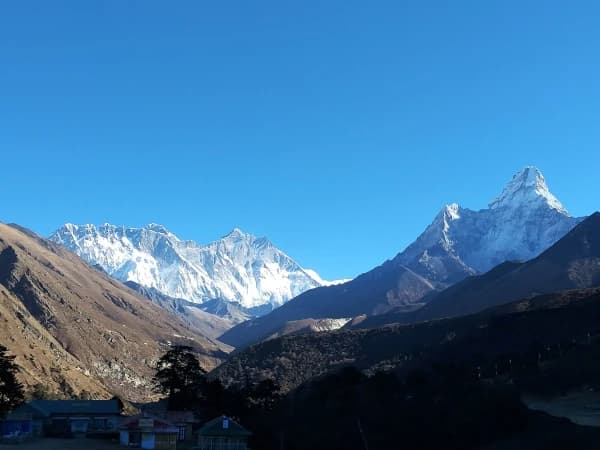
Few mountain scenes are as instantly captivating as Ama Dablam’s knife-edged silhouette. With its elegant hanging glacier (dablam), the peak seems sculpted for postcards and pilgrimages alike. The Ama Dablam Base Camp Trek is a chance to walk into the mountain’s shadow: a short but rich journey into Himalayan valleys where culture and high-alpine drama culminate into an adventurous and soulful journey. Over 12 days, you’ll travel from Kathmandu into the Khumbu heartland, move through rhododendron forests and yak pastures, visit ancient gompas, and climb close to the moraine-rimmed cirque that forms Ama Dablam’s base.

This route is ideal for travellers who want an intimate Himalayan experience without the longer commitment of a full circuit. The trek focuses on cultural immersion — Tengboche’s chanting priests, Khumjung’s village life — and the physical reward of standing beneath Ama Dablam’s soaring walls. While not a technical climbing route, reaching base camp does involve steep trails that demand fitness and a careful pace. At Iconic Himalaya, our guides and porters manage the logistics and safety so you can savour every vista and conversation, returning with memories of a mountain that is, in many ways, the Khumbu’s most beloved face.

Ama Dablam Base Camp Trek Highlights

  • Walk into the intimate world of Ama Dablam — one of the Himalaya’s most beautiful and iconic mountains.
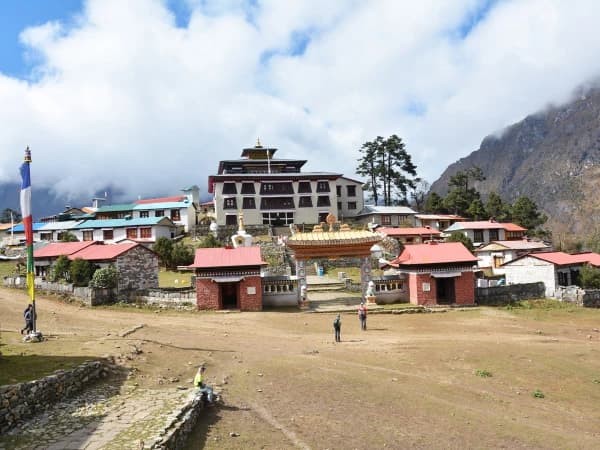
  • Visit the sacred Tengboche Monastery (3,860 m) and experience morning prayer ceremonies beneath a towering skyline.
  • Reach Ama Dablam Base Camp (day hike) to stand beneath the Dablam and view the steep, technical flanks of the peak.
  • Climb to the Everest View Hotel for sweeping panoramas of Everest, Lhotse and Nuptse.
  • Experience authentic Sherpa village life in Khumjung and Pangboche — gompas, mani walls and warm teahouse hospitality.
  • Walk through rhododendron forests, alpine meadows and alongside the Dudh Koshi River.
  • Shorter, accessible itinerary ideal for travellers with limited time who still want high-altitude theatre and culture.
  • Comfortable teahouse nights and hearty local meals that reflect Khumbu flavours and warmth.
Ama Dablam Base Camp Trek Itinerary

Note: During peak travel months such as April, May, October and November, direct flights from Kathmandu to Lukla are not available. Instead, you will have to opt from flying to Lukla from Manthali. Manthali is a pleasant 5–6-hour drive from Kathmandu.

Lukla - LuklaExpand all

Upon arrival at Tribhuvan International Airport, an Iconic Himalaya representative will welcome you and transfer you to your hotel. Kathmandu is a stirring overture to the trip — narrow lanes, bustling markets full of colour and carved woodwork that hints at centuries of craft. In the evening, you will meet your trekking leader and team; the leader will go over the route, check your kit, and share stories that begin to turn maps into a living journey. A welcome dinner gives a first taste of Nepali hospitality.

Accommodation: Standard Hotel check in at ThamelMode of Travel: Pick up from the AirportDuration: 20 to 30 MinutesDistance: 6 Kilometers

Spend the day breathing the valley’s spiritual air. Visit Swayambhunaths stupa with its watchful eyes, the sacred ghats of Pashupatinath, and the serene white dome of Boudhanath, where prayer wheels click in slow, hypnotic rotation. Stroll the courtyards of Durbar Square and let the city’s layering of history settle you. In the afternoon, finalise your trekking equipment — test boots, select layers, and pack the Iconic Himalaya duffel — and rest: the mountains ask for a calm, prepared mind as much as a fit body.

Max Altitude: 1,455 m.|4,773 ft. Meals: BreakfastAccommodation: Standard Hotel in ThamelMode of Travel: By private Car/Van/ JeepDuration: 6 to 7 Hours

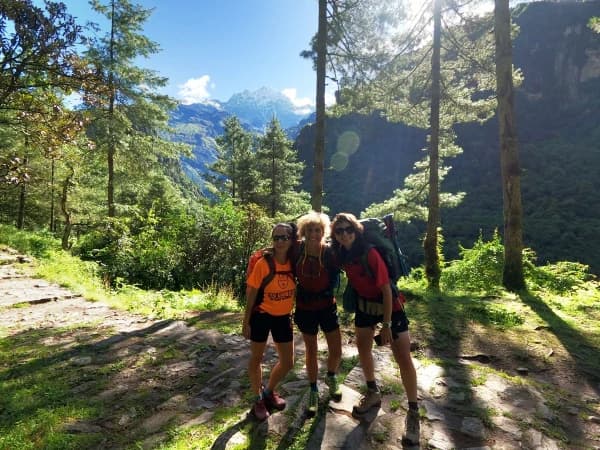
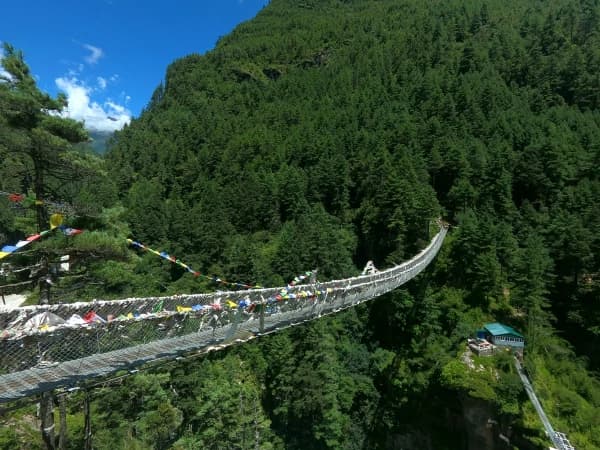
An early mountain flight to Lukla is often a highlight in itself: a short plane ride threading between ridges, skirting ice-rimmed summits, then dropping you onto a tiny airstrip perched on a slope. From Lukla, the trail dips and follows the Dudh Koshi River through pine and rhododendron, past mani walls and prayer flags. Crossing a suspension bridge, you arrive at Phakding, where the hum of the river and the smell of wood smoke make the first night in the mountains feel like a rite of passage.

Max Altitude: 2,640 m.|8,562 ft. Meals: Breakfast, Lunch and DinnerAccommodation: Guest house or LodgeMode of Travel: Drive/Flight and WalkingDuration: Depends on weather condition

Today, the trail steadily climbs into the Sherpa heartland. The route is dotted with chortens and prayer walls, and every suspension bridge feels like a rhythmic heartbeat across the valley. The final ascent into Namche Bazaar — the region’s bustling market town — brings your first close view of the higher Himalaya; peaks that felt distant now assert themselves on the skyline. Namche’s bakeries, gear shops and cafes are perfect for an evening of acclimatisation and gentle exploration.

Max Altitude: 3,440 m.|11,286 ft. Meals: Breakfast, Lunch and DinnerAccommodation: Guest house or LodgeMode of Travel: WalkingDuration: 6 to 7 HoursDistance: 11 Kilometers

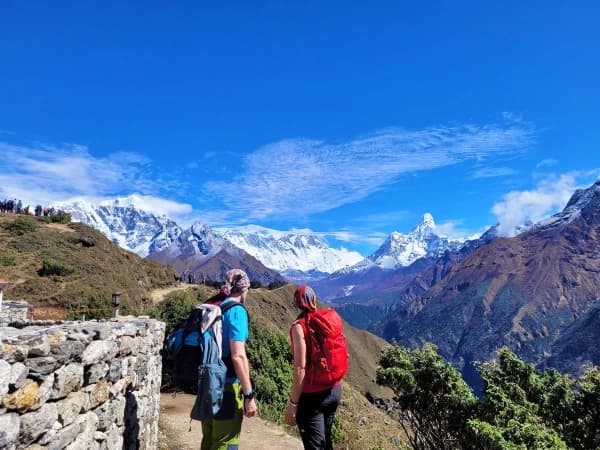
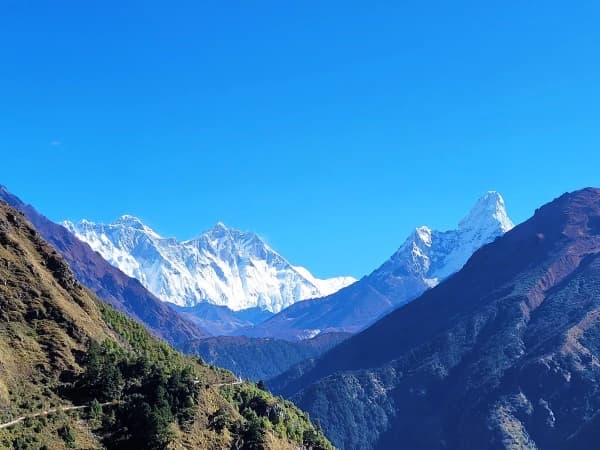
Namche is purposefully slow: today you climb a short ridge to the Everest View Hotel, whose terrace is perhaps the best single-shot panorama in the region. From here Everest, Lhotse, and Nuptse present themselves in dignified alignment; Ama Dablam’s pearly ridge may catch the light as well. The afternoon is for the Sherpa Museum, bread from a local bakery, or wandering small alleys that hum with village life — a restorative day that prepares you for higher ground.

Max Altitude: 3,880 m.|12,729 ft. descend to 3,440 m. Meals: Breakfast, Lunch and DinnerAccommodation: Guest house or LodgeMode of Travel: WalkingDuration: 3 to 4 HoursDistance: 4.5 Kilometers

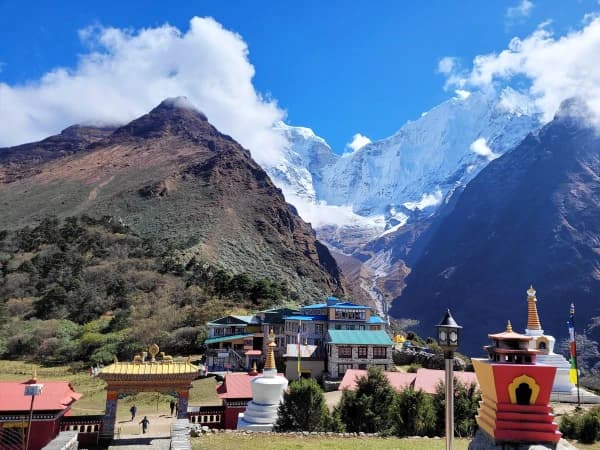
The path leaves Namche through pine forests and then opens to higher ridgelines. On the approach to Tengboche, the monastery unexpectedly crowns a broad ridge with an almost cinematic view of Ama Dablam and the surrounding giants. The gompa itself is a place of stillness: whitewashed walls, prayer flags in the wind, and the gentle cadence of monks’ chants if you time the visit for a puja. The evening prayer — drums, cymbals and the low swell of voices — is a mountain memory many trekkers carry for life.

Max Altitude: 3,867 m.|12,687 ft. Meals: Breakfast, Lunch and DinnerAccommodation: Guest house or LodgeMode of Travel: WalkingDuration: 4 to 5 HoursDistance: 9.5 Kilometers

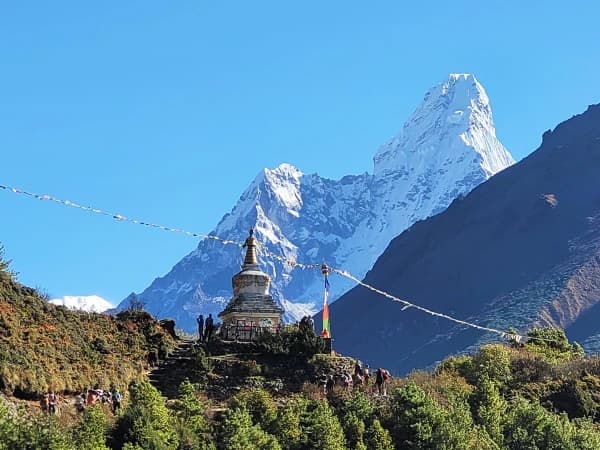
From Tengboche the trail descends then climbs through mixed forest and pasture, bringing you into the quieter, more intimate villages such as Pangboche. This hamlet is a hub of mountain culture; its gompa houses relics and the village elders keep stories of long treks and expeditions. The approach to Pangboche frames Ama Dablam differently — nearer now, its north ridge stacking like a ladder of snow and rock. The teahouses here are homely; evenings often mean cups of butter tea and conversation by a wood stove.

Max Altitude: 3,985 m.|13,074 ft. Meals: Breakfast, Lunch and DinnerAccommodation: Guest house or LodgeMode of Travel: WalkingDuration: 2 to 3 HoursDistance: 4 Kilometers

Set out early from Pangboche on a steep, steady trail that climbs moraine and alpine pasture toward the cirque beneath Ama Dablam. The base camp itself is not a cluster of expeditions like Everest’s; it is a more intimate, raw place where the mountain’s steep walls seem to fold around you. Time at base camp is for quiet observation — watching seracs, studying routes, and feeling the scale of the rock and ice above. Return to Pangboche the same day, descending with light hearts and heavy memories.

Note: when snow or conditions make the approach technical, this day can be adapted; your guide will advise.

Max Altitude: 4,570 m.|14,993 ft. back to 3,985 m.|13,074 ft. Meals: Breakfast, Lunch and DinnerAccommodation: Guest house or LodgeMode of Travel: WalkingDuration: 5 to 6 HoursDistance: 10 Kilometers

The journey down through rhododendrons and pine is restorative: valleys widen, the air warms a little, and the ordinary sounds of village life return. Arrive in Namche Bazaar with time for a hot shower, some souvenir browsing, and a relaxed evening. The town has an easy, celebratory mood tonight — small cafés and bakeries are perfect for reflecting on the trek’s highlights.

Max Altitude: 3,440 m.|11,286 ft. Meals: Breakfast, Lunch and DinnerAccommodation: Guest house or LodgeMode of Travel: WalkingDuration: 6 to 7 HoursDistance: 14 Kilometers

Retrace the trail along the Dudh Koshi, crossing suspension bridges and passing the villages you first encountered. The walk down seems quicker but is no less beautiful; the light is softer and conversations more reflective. Arrive in Lukla in the late afternoon and relax over a farewell dinner with your trekking team, sharing stories from the trail.

Max Altitude: 2,840 m.|9,317 ft. Meals: Breakfast, Lunch and DinnerAccommodation: Guest house or LodgeMode of Travel: WalkingDuration: 7 to 8 HoursDistance: 18 Kilometers

Take a magnificent scenic flight from Lukla back to Kathmandu. If the skies are clear, you’ll be treated to breathtaking views of Nepal’s towering mountains before making the thrilling landing.

Once in Thamel, you can spend your time as you wish — explore the vibrant streets, relax in the comfort of your hotel, or shop for souvenirs. In the evening, enjoy a farewell dinner, celebrating your spiritual journey across the heart of the Himalayas. Overnight stay will be at a comfortable 3-star hotel in Thamel, allowing you to rest comfortably.

Max Altitude: 1,455 m. Meals: Breakfast and LunchAccommodation: Standard Hotel in ThamelMode of Travel: Flight and DriveDuration: 30 Minute Flight

It is the end day of your Nepal tour vacation. An Iconic Himalaya representative will pick you up from the hotel and take you to Kathmandu International Airport for your home flight.

Safe travels, and Namaste!

Max Altitude: 1,455 m.|4,773 ft. Meals: BreakfastAccommodation: Check out in HotelMode of Travel: Drop to the AirportDuration: 20 to 30 MinutesDistance: 6 Kilometers
Unable to locate what are you seeking?Download brochure or customize your trip.
Customize Trip
Cost Details
Includes
  • In-country airport pickup & drop in a private vehicle.
  • Standard hotel accommodation (with breakfast) in Kathmandu.
  • Domestic flights (Kathmandu–Lukla–Kathmandu) including domestic airport taxes.
  • Professional, government-licensed English-speaking guide; experienced porters to carry luggage (approx 25 kg per porter; 1 porter per 2 trekkers).
  • All meals during the trek (breakfast, lunch & dinner) in tea houses.
  • Best available accommodation in tea houses during the trek.
  • Staff salary, insurance for staff, food and accommodation for crew.
  • All necessary permits: Sagarmatha National Park Permit, Khumbu Pasanglhamu Rural Municipality permit.
  • Water purification (tablets or filters) for safe drinking water.
  • First aid kit carried by the guide.
  • Emergency rescue assistance coordination.
  • All  government local taxes/VAT and office expenses
  • Sleeping bag, down jackets and a duffle bag- if necessary( return after trek).
  • Trip completion certificate and a trek route map.
Excludes
  • Nepal entry visa fee (obtainable on arrival or online).
  • Travel insurance (compulsory; must cover high-altitude rescue & helicopter evacuation).
  • Meals in Kathmandu beyond those included and all beverages (hot drinks, bottled
  • water, and alcohol).
  • Personal trekking equipment (unless rented), laundry, phone calls, and hot shower or
  • Wi-Fi charges in teahouses.
  • International airfare to/from Nepal.
  • Excess baggage charges on domestic flights.
  • Extra nights in Kathmandu for early arrival, late departure, or emergency/voluntary itinerary changes.
  • Optional trips and sightseeing if extended.
  • Tips/gratuities for guides and porters.
  • Any service not listed under “Includes.”
Dates & Availability

We run fixed-departure and private group treks throughout the main seasons. We also customize departure dates to fit your schedule. We heartily welcome families, solo trekkers, and private groups. Please reserve early for autumn and spring seasons as spaces fill quickly.

Note:

  • The itinerary may change due to weather or health reasons. A buffer day is advised for flight delays to/from Lukla.
  • For trip confirmation, a deposit (typically 25% of total) is required; balance due per operator policy.
Ama Dablam Base Camp Trek Equipments

Bag & Packs

  • Main backpack: 40–65 L capacity with comfortable hip belt and ventilated back.
  • Daypack: 20–30 L for daily essentials (water, camera, layers).
  • Duffel bag: for porter to carry main luggage.

Footwear

  • Sturdy, waterproof trekking boots with ankle support.
  • Comfortable camp shoes or sandals for evenings.
  • Spare trainers or sandals for village walks.

Clothing

  • Warm down jacket and lightweight insulated jacket.
  • Fleece or mid-layers (2).
  • Waterproof, breathable shell jacket and pants.
  • Thermal base layers (top & bottom).
  • Quick-dry trekking shirts and long sleeves.
  • Trekking pants and spare pair.
  • Warm hat/beanie, sun hat, gloves, warm socks (wool).
  • Gaiters for snow or muddy sections.

Sleeping & Bedding

  • Sleeping bag rated to -10 °C or -15 °C for comfort.
  • Lightweight liner (optional, adds hygiene).

Gadgets & Accessories

  • Sunglasses (UV protected) and sunscreen (high SPF).
  • Headlamp with spare batteries.
  • Trekking poles (recommended).
  • Water bottles (2 × 1 L) and/or hydration bladder; water purification tablets.
  • Power bank and spare camera batteries (limited charging in tea houses).
  • Personal toilet kit, quick-dry towel, toilet paper.
  • Basic repair kit (needle/thread, duct tape), zip ties, and plastic bags for waterproofing.
  • Compass & map (guide will carry detailed maps).

Medical & First Aid

  • Personal prescription medicines and a small personal first aid kit.
  • Diamox (acetazolamide) if advised by your physician for acclimatization.
  • Pain relievers, antidiarrheal, rehydration salts, antiseptic wipes, blister plasters.

Women-Specific Tips
Women trekkers should carry essential hygiene products, moisturizer, lip balm with SPF, and wet wipes for long days. A light shawl or scarf is useful for monastery visits or traditional households. Many teahouses are run by Sherpa women, creating a welcoming and safe environment. Guides ensure privacy and safety, making the trek comfortable and empowering. Trekking in the Himalaya as a woman is about embracing independence, community, and confidence on the trail.

Prescription Medicine and First Aid
Carry regular prescriptions for the entire trip. Our guides carry an extended first aid kit; however, personal medicines for chronic conditions are the traveler’s responsibility.

Essential Information

Ama Dablam Trek Difficulty

The trek is moderate to challenging depending on fitness and the day you take to reach base camp. The base-camp day is steep and long; good fitness, steady pacing and prior hiking conditioning make the experience enjoyable. No technical climbing is required to reach the
base camp vantage points on a standard trek.

Altitude Sickness & Remedies

Altitude can affect anyone. Ama Dablam Base Camp is at max 4,570 m and proper acclimatization will be needed. Symptoms include headache, nausea, dizziness, loss of appetite and difficulty sleeping.
Preventive measures:

  • Hydrate liberally (3–4 L/day).
  • Climb slowly and obey rest/acclimatization days.
  • Inform the guide immediately of symptoms.
  • Medical option: Diamox (acetazolamide) under doctor’s advice.
  • Descend promptly if symptoms worsen (HAPE/HACE are medical emergencies).

Travel Insurance

Comprehensive travel insurance that covers emergency helicopter evacuation and high-altitude rescue is mandatory. Confirm policies cover altitudes up to 6,000 m and include trip cancellation for weather or medical emergencies.

Training for the Trek

Prepare with cardiovascular training (walking, hiking with a weighted pack, stair climbing) for 6–8 weeks prior. Include multi-hour hikes with elevation gain to build endurance. Strength training for legs and core helps with long descents.

Best Time and Weather

Spring (March–May) and autumn (September–November) offer the clearest skies and best walking conditions. Spring blooms bring rhododendrons and warmer days; autumn is crisp with excellent visibility. Winter is cold but quiet; monsoon season can obscure views and make trails slippery.

Food & Accommodation on the Trek

Teahouses provide basic but hearty meals: dal bhat, soups, noodles, potatoes, eggs and simple desserts. Please expect twin rooms with shared or basic private bathrooms and hot showers are limited and often charged extra. You can carry electrolyte powders and snacks for high days.

Nutshell:

  • Max Altitude: 4,570 m
  • Duration: 14 Days
  • Terrain: Forest trails, moraines, glacier crossings, alpine ridges
  • Daily Walking: 4–8 hours
  • Accommodation: Tea houses; hotels in Kathmandu
  • Food: Nepali, Tibetan, continental options
  • Permits: Sagarmatha National Park; Khumbu Pasanglhamu Rural Municipality
  • Emergency: Helicopter evacuation (insurance-covered)
Ama Dablam Base Camp Trek FAQs

For normal trekking seasons and the standard approach, no technical climbing gear is required — the route is a demanding hike rather than a climb. In heavy snow or early/late seasons, microspikes or crampons and poles may be useful; the guide will advise and provide or help source gear if necessary.

Yes — altitude can affect anyone. The itinerary includes acclimatisation time in Namche and a careful ascent profile. Guides carry pulse oximeters and first-aid kits; if symptoms of AMS appear, descent is the only safe remedy. Travel insurance covering high-altitude evacuation is strongly recommended.

You will need the Sagarmatha National Park Entry Permit and the Khumbu Pasang Lhamu Rural Municipality Permit. Iconic Himalaya will organise these permits for you prior to departure.

Absolutely. You can extend the trip toward Gokyo, add acclimatisation days, or request a private departure. If you want more time at base camp or a gentler pace, Iconic Himalaya will design the route to match your wishes.

Yes — a licensed guide is highly recommended for safety, navigation and cultural insight. Porters carry heavier luggage (usually up to ~15–20 kg) so you trek with a light daypack. Iconic Himalaya ensures fair wages, insurance and good working conditions for all staff.

Very safe when guided. Many solo travellers join set departures and find company among fellow trekkers and Sherpa hosts. A guide adds both safety and cultural depth to the experience.

The nearest clinics are in Namche Bazaar and Pangboche, both with access to basic first aid and communication with emergency helicopter services if needed. Guides are trained in altitude-related health management and carry first-aid kits for minor issues.

Wi-Fi is available at most teahouses for a small fee, and mobile coverage (mainly Ncell or Namaste) reaches Namche, Tengboche, and occasionally Pangboche. However, connection speed varies with altitude and weather — it’s best to treat connectivity as a luxury, not a guarantee.

The trek passes through Sagarmatha National Park, home to Himalayan tahr, musk deer, blood pheasants, and — rarely — snow leopards or red pandas. You’ll also see a wealth of birdlife, including the colorful Himalayan monal, Nepal’s national bird. Spring trekkers enjoy forests alive with blooming rhododendrons and fluttering butterflies.

Respecting local customs, minimizing plastic waste, and choosing refillable water bottles make a big difference. Stay in locally owned teahouses, avoid single-use plastics, and purchase snacks or crafts directly from village families. Trekking with companies that ensure ethical porter welfare and fair wages helps the community thrive sustainably.

Speak to an Expert+977 9851130654

Share your queries and contact details on WhatsApp, and we’ll reach out to tailor a package that meets your needs.

Need Help? Call Us+977 9851130654