3 Reviews

Annapurna Circuit Tilicho Lake Trek

Annapurna Circuit Trek with Tilicho Lake - 22 Days
Duration
20 Days
Trip Grade
Strenuous
Country
Nepal
Maximum Altitude
5,416 m.| 17,769 ft.
Group Size
1-20 people
Starts/Ends
Kathmandu - Kathmandu
Communication
Phone & Wi-Fi
Activities
Trekking
Best Time
Autumn and Spring

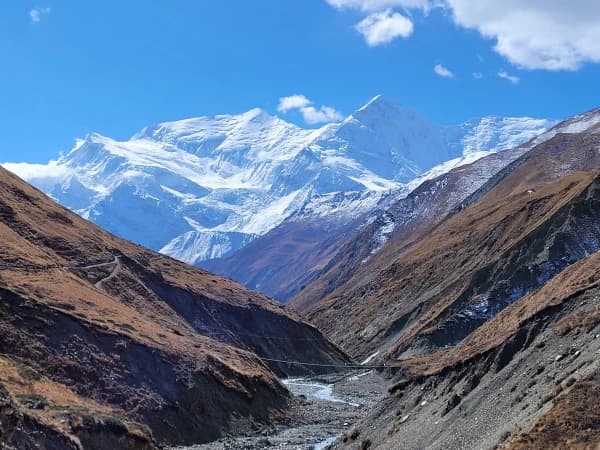
The Annapurna Circuit Trek via the Tilicho Lake is a journey through the heart of Nepal’s Annapurna region, combining the classic Annapurna Circuit experience with a high-altitude adventure to Tilicho Lake, one of the highest lakes in the world at 4,919 meters. This trek is perfect for travelers seeking both cultural exploration and alpine beauty. You’ll traverse terraced farmlands, traditional villages, lush forests, rugged river valleys, and high mountain passes, culminating in the spectacular views of Tilicho Lake surrounded by snow-capped peaks.

The trek begins in Kathmandu, a city of vibrant culture, centuries-old temples, and bustling markets, providing a fascinating start to your Himalayan adventure. From Kathmandu, you journey to Besisahar, the gateway to the Annapurna region, before gradually ascending through charming villages such as Chame, Pisang, Manang, and the sacred Thorong Phedi, preparing your body for the challenge of high altitudes. Along the way, you will experience the rich cultural traditions of the Gurung, Manangi, and Thakali people, exploring monasteries, local markets, and mountain hospitality.

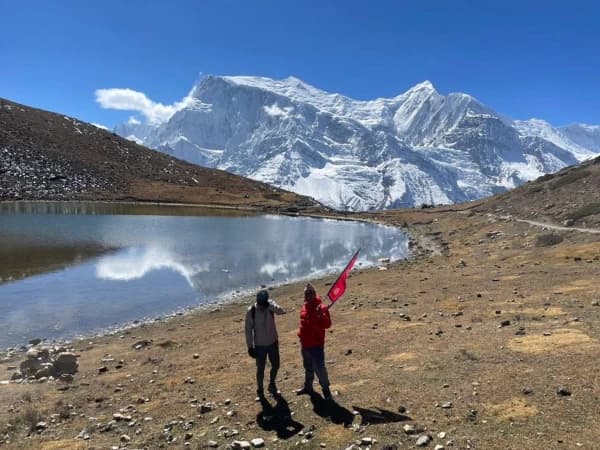
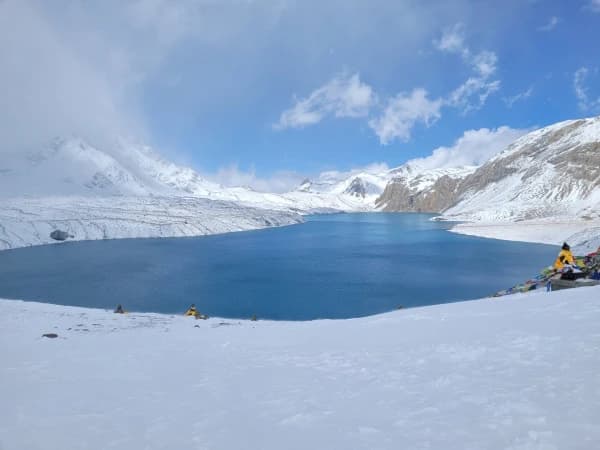
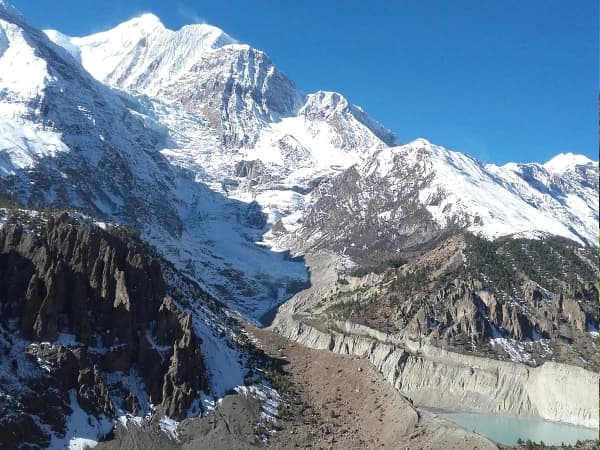
Tilicho Lake is the achievement of the trek — a glacial lake nestled amid the towering Annapurna peaks. The walk to the lake involves navigating rugged trails and high-altitude terrain, rewarding trekkers with breathtaking views of crystal-clear waters and dramatic mountain landscapes. The descent from Tilicho reconnects you with the main Annapurna Circuit route, passing through ancient villages, apple orchards, and natural hot springs before returning to the lush lower valleys.

Highlights of the Annapurna Circuit Tilicho Lake Trek

  • Visit the Tilicho Lake, one of the highest lakes in the world, framed by snow-capped peaks, glaciers, and alpine meadows.
  • Experience the thrill of crossing one of the world’s most iconic trekking passes, the Thorong La Pass (5,416 m), with panoramic Himalayan views at sunrise.
  • Explore traditional Gurung, Manangi, and Thakali villages, visiting monasteries, local homes, and observe unique customs.
  • Walk through terraced fields, subtropical forests, rhododendron valleys, and high-altitude arid regions.
  • View (and take photos) of majestic peaks like Annapurna I, II, III, Machhapuchhre, and Tilicho’s surrounding glaciers.

What Can I Expect from the Annapurna Circuit Tilicho Lake Trek?

The Annapurna Circuit Trek via Tilicho Lake is a journey that blends cultural immersion with high-altitude adventure. From lush subtropical valleys to rugged highland passes, trekkers experience a wide variety of landscapes along the way. Villages perched on terraced hillsides, monasteries tucked in remote corners, and grazing yak herds offer unique glimpses into Himalayan life.

This trek is moderately challenging, with daily walks ranging from 5 to 7 hours, and the highest point at Thorong La Pass (5,416m) demanding endurance, careful pacing, and acclimatization. The addition of Tilicho Lake, one of the highest lakes in the world at 4,919 meters, introduces a stunning alpine highlight, surrounded by glaciers and snow-capped peaks.

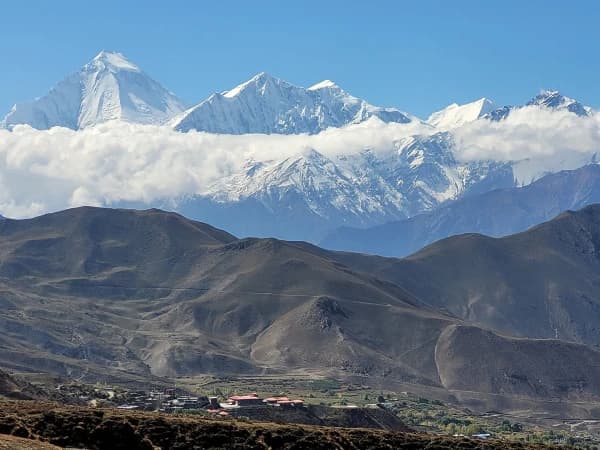
Every step brings new vistas: the sweeping Annapurna and Dhaulagiri massifs, cascading waterfalls, alpine meadows, and winding river valleys. Cultural encounters with Gurung, Manangi, and Thakali communities provide insight into centuries-old traditions, festivals, and lifestyles. For photographers and nature lovers, the sunrise over Thorong La Pass or the mirror-like reflection of Tilicho Lake offers unforgettable images. Evenings are spent in warm, cozy teahouses serving traditional Nepali meals, allowing trekkers to share stories, relax, and prepare for the next day’s journey.

Major Attractions of the Annapurna Circuit Tilicho Lake Trek

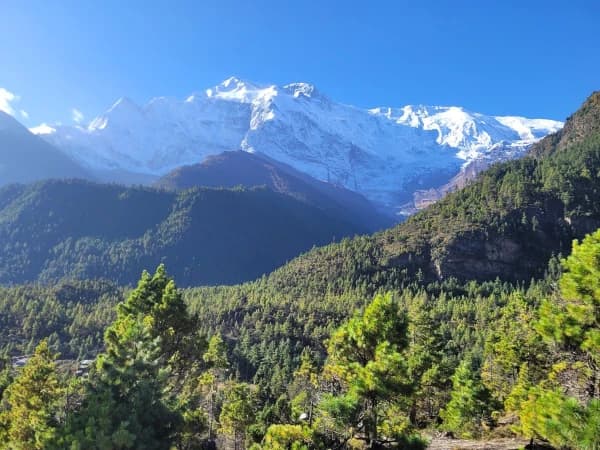
Your adventure begins in Kathmandu, a city alive with history, temples, and vibrant culture. From here, you travel to Besisahar and onward to the Marshyangdi valley, passing through villages like Chame and Pisang, where traditional farming and terraced fields meet panoramic mountain vistas. Pisang Upper Village, in particular, offers breathtaking views of Annapurna II and Gangapurna peaks.

Manang, a high-altitude settlement, is a hub for acclimatization. Here, trekkers can enjoy short hikes to Gangapurna Lake, explore centuries-old monasteries, or simply absorb the serenity of the Himalayan valley. Continuing along the trail, you encounter Tilicho Lake, a dazzling gem amid towering peaks and glaciers, offering a once-in-a-lifetime alpine experience.

The crossing of Thorong La Pass is a defning moment, as you watching the sun rise over the Annapurna and Dhaulagiri ranges from the pass. On the descent, trekkers visit Muktinath, a sacred pilgrimage site with both Hindu and Buddhist significance. Traditional settlements like Kagbeni and Marpha showcase Mustang-style stone houses, narrow streets, and apple orchards. Finally, the journey winds through Tatopani’s hot springs, a natural haven for rejuvenation, before returning to the lakeside calm of Pokhara, where trekkers can reflect on their epic adventure.

Who Can Do the Annapurna Circuit Tilicho Lake Trek?

This trek is designed for adventurers with a moderate level of fitness and a spirit for high-altitude exploration. Trekkers should be comfortable with daily walks of 5–7 hours and able to handle steep ascents and descents. While no technical climbing skills are required, proper acclimatization and preparation are crucial, especially for Thorong La Pass and the Tilicho Lake detour.

Iconic Himalaya welcomes solo travelers, couples, small groups, and even families with older children or teenagers who are fit and accustomed to long walks for the Annapurna Circuit Trek via Tilicho Lake. Our experienced guides and porters, ensure safety, comfort, and cultural guidance. The flexible itinerary allows trekkers to pace themselves, explore villages, take photography breaks, and enjoy the journey at their own rhythm.

Annapurna Circuit Tilicho Lake Trek Itinerary
Kathmandu - KathmanduExpand all

Welcome to Kathmandu, Nepal’s vibrant capital, where ancient temples, bustling markets, and rich cultural heritage blend seamlessly with modern life. Upon arrival, a representative from Iconic Himalaya will greet you at the airport and escort you to your hotel. After settling in, you’ll receive a personal briefing about your trek, including the route, permits, and essential tips for your Himalayan adventure. Later, enjoy a delicious meal and, if you wish, take a short stroll through the lively streets of Thamel, soaking in the city’s unique energy.

Max Altitude: 1,455 m.|4,773 ft. Accommodation: Check in the hotelMode of Travel: Pickup from the airport by car/jeep/vanDuration: 20 to 30 MinutesDistance: 5/6 Kilometers

Kathmandu Valley is home to four UNESCO World Heritage Sites, each brimming with history and culture. You can explore the historic palace squares of Kathmandu, Patan, and Bhaktapur, marveling at intricately carved woodwork, ancient courtyards, and pagoda-style temples. Visit revered religious sites such as Pashupatinath Temple, Swayambhunath Stupa, and Boudhanath Stupa, learning about the legends, rituals, and traditions from your guide. Enjoy a traditional Nepali thali or savor momos, Nepal’s beloved dumplings, as you prepare for your trek.

Max Altitude: 1,455 m.|4,773 ft. Meals: BreakfastAccommodation: Stander Hotel in ThamelMode of Travel: Bus/car/jeep/vanDuration: Full Day 6/7 Hours

It’s time to start our adventure in the Annapurna Mountains, and we’ll set out right after breakfast in Kathmandu. Our destination today is the town of Dharapani via Beshisahar, which takes about eight or nine hours to reach using a local bus or jeep. We can also arrange for private transportation in a Jeep, which will reduce the time of this drive. No matter which option you choose, you’re sure to enjoy your first scenic glimpse of rural Nepal along the way. From Beshisahar, leaving the tourist bus behind, we’ll embark upon the next leg of our journey into the Annapurnas by Jeep. Our route follows the Marsyangdi River as it rises into the foothills of the Himalayan mountains, where you’re about to start one of the best treks in Nepal. The road climbs along steep hills where sparkling waterfalls cascade across sheer cliff faces before arriving in Dharapani after about four hours. Here in town, you’ll get your first taste of traditional Nepali teahouse accommodations as you enjoy some authentic local cuisine and settle in for a night in the mountains.  You’ll spend the first night in Dharapani, right on the doorstep of the Himalayas.

Max Altitude: 1960 m.|6,430 ft. Meals: Breakfast, Lunch and DinnerAccommodation: Guest houseMode of Travel: Drive local bus/jeepDuration: 8 to 9 HoursDistance: 213 Kilometers

At long last, it’s time to start your Annapurna Circuit Trek! We’ll set out from Dharapani in the morning, gaining elevation as we climb across alpine meadows and ascend along old stone staircases carefully carved into dramatic hillsides. Soon we’ll start to catch glimpses of the mighty Himalayas: Manaslu, Annapurna II, and the Lamjung Himal. Along with our change in elevation comes a change in the mountain scenery; after a few hours, we’ll start trekking amongst shaded pinewoods in the constant company of birdsong. After about six or seven hours on the trail, we’ll arrive in Chame and select the best available guesthouse for tonight’s accommodations.

Max Altitude: 2,710 m.|8,891 ft. Meals: Breakfast, Lunch and DinnerAccommodation: Guest houseMode of Travel: WalkingDuration: 6 to 7 HoursDistance: 15.5 Kilometers

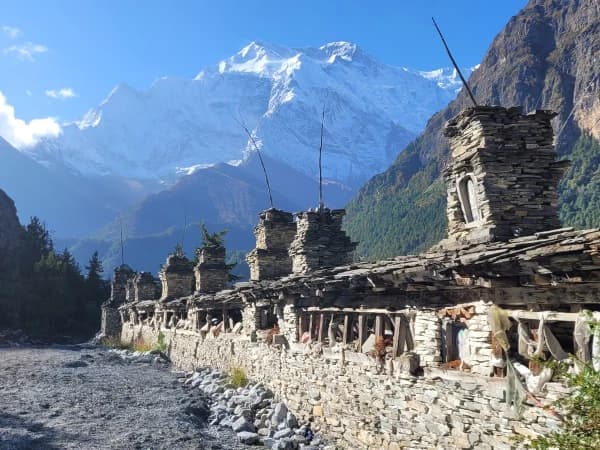
As we embark on the next stretch of the Annapurna Circuit Trek, you’ll discover a feature common to many treks in Nepal: Mani walls. These are comprised of many small stones, each engraved with Buddhist mantras. Remember to pass them on the left in accordance with local traditions. Throughout today’s hike, you’ll also earn magnificent views of Annapurna III, Annapurna IV, and the trekking mountain known as Pisang Peak. Crossing over the Marsyangdi River some hours later, we’ll arrive in Pisang. The settlement is divided into Lower Pisang (3240m) and Upper Pisang (3310); we’ll choose the best teahouse available here. We’ll also pay a visit to the colorful monastery in Upper Pisang, which is lavishly decorated with Buddhist iconography.

Max Altitude: 3,310 m.|10,859 ft. Meals: Breakfast, Lunch and DinnerAccommodation: Guest houseMode of Travel: WalkingDuration: 5 to 6 HoursDistance: 13.5 Kilometers

At Iconic Himalaya Adventure, we tend to favor the scenic route to Manang, which rounds out the first phase of the Annapurna Circuit with some of the best views you’ll find on any trek in Nepal—but if you need more time to rest and relax, a shorter route is also available. No matter our choice, today’s hike brings us through green woodlands clustered against steep mountainsides and along winding paths where soaring mountains like Annapurna II and III are sure to keep your camera busy. We’ll reach Manang after no more than six or seven hours on the trail.

Max Altitude: 3,540 m.|11,614 ft. Meals: Breakfast, Lunch and DinnerAccommodation: Guest houseMode of Travel: WalkingDuration: 6 to 7 HoursDistance: 15.7 Kilometers

As we reach serious alpine elevations, our bodies will need more time to acclimatize to avoid contracting any symptoms of altitude sickness. It’s for this reason that we’ll spend an extra day in the scenic surrounds of Manang—but that doesn’t mean we won’t be hiking today. In fact, climbing to the high viewpoint of Chongar or the remote little monastery of Praken Gompa before returning to Manang will make for a great excursion that will also help us with the acclimatization process. Later, we’ll return to our guesthouse for a traditional meal as the sun sets over the Annapurnas.

Max Altitude: 3,910 m.|12,828 ft. back to 3,540 m.|11,614 ft. Meals: Breakfast, Lunch and DinnerAccommodation: Guest houseMode of Travel: WalkingDuration: 2 to 3 HoursDistance: 3/4 Kilometers

Our trek in Nepal continues today as we leave Manang behind and set out through coniferous woodlands and pastoral fields, crossing a suspension bridge before continuing in the direction of Khangsar: a small traditional village and a great place to stop for lunch. From here it’s just a short hike to Siri Kharka, or Shree Kharka. The village commands breathtaking views across a snow-covered stretch of the Annapurnas, and it sits comfortably beyond the reach of the Annapurna Circuit’s recent road construction projects. We’ll spend a pleasant evening here at our guesthouse after savoring the town’s fabulous Himalayan panoramas.

Max Altitude: 4,045 m.|13,271 ft. Meals: Breakfast, Lunch and DinnerAccommodation: Guest houseMode of Travel: WalkingDuration: 4 to 5 HoursDistance: 12 Kilometers

Our Annapurna Circuit Trek continues today as we hike for another four hours, drawing ever closer to Tilicho Lake. We’ll depart from Siri Kharka after breakfast, following a trail which passes seasonally occupied herders’ shelters and descends into a picturesque valley. Next, we’ll need to choose between a shorter, more treacherous path and a longer, steeper one. At Iconic Himalaya Adventure, we tend to prefer making a steep climb in order to skip the most unstable section of the trail. We’ll stop for the day at the Tilicho Base Camp Hotel, which sits alongside the rubble of a glacial moraine.

Max Altitude: 4,140 m.|13,582 ft. Meals: Breakfast, Lunch and DinnerAccommodation: Guest houseMode of Travel: WalkingDuration: 3 to 4 HoursDistance: 8 Kilometers

Today’s adventure is a long and challenging one—but it also comes with some of the most rewarding mountain views you’ll find on any trek in Nepal. We’ll get started before the day has fully dawned, climbing along the glacial moraine to reach an elevation of more than 5,000 meters. It’s here that we’ll find the stunning azure waters of Tilicho Lake, or Tilicho Tal: an often-frozen alpine lake that’s sure to take your breath away. While some trekkers camp here, we’ll make the extra push back to Siri Kharka this afternoon to spend the night in a comfortable guesthouse.

Max Altitude: 4,919 m.|16,338 ft. back to 4,045m.|13,271 ft. Meals: Breakfast, Lunch and DinnerAccommodation: Guest houseMode of Travel: WalkingDuration: 7 to 8 HoursDistance: 19 Kilometers

From Siri Kharka, we’ll enjoy fabulous Himalayan views as we descend through a birch forest before gradually climbing across pasturelands where our only company will be the occasional train of pack-laden mules. As we approach the settlement of Gunsang for lunch, we’ll discover a fine sight indeed: the towering peaks of Annapurna II and IV. Moving on, our path leads across multiple suspension bridges before arriving in Yak Kharka. While it’s possible to push a little further, we generally prefer to stop here in Yak Kharka—and we can even add on an optional acclimatization hike to Ledar and back.

Max Altitude: 4,020 m.|13,188 ft. Meals: Breakfast, Lunch and DinnerAccommodation: Guest houseMode of Travel: WalkingDuration: 4 to 5 HoursDistance: 10 Kilometers

Setting out from Yak Kharka, we’ll pass Ledar before making strides in the direction of Thorong Phedi and the famous Thorong La. You can expect to see herds of grazing yaks wandering beneath the marvelous face of Annapurna III as we trek. Passing through the village of Ledar, we’ll follow the course of the Jarsang Khola River before crossing over its waters to approach Thorong Phedi itself. Before we arrive, we’ll stop for a snack at the Deurali Teahouse, giving us the extra fuel we need to reach this unusually scenic spot in the Himalayas of Nepal.

Max Altitude: 4,540 m.|14,845ft. Meals: Breakfast, Lunch and DinnerAccommodation: Guest houseMode of Travel: WalkingDuration: 3 to 4 HoursDistance: 7.5 Kilometers

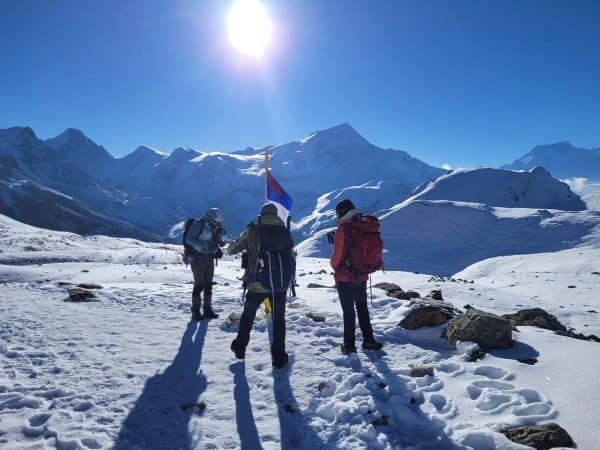
Are you ready for an exciting day on the Annapurna Circuit Trek? Today’s hike begins with a series of steep switchbacks, following the course of time-worn yak trails to reach what’s known colloquially as High Camp. From here, it should take us between four and five hours to reach Thorong La itself. This is a high mountain pass of spectacular beauty, where you’ll see the snow-covered summits of the Annapurnas, Gangapurna, and other Himalayan giants as colorful prayer flags snap in the cold mountain air. From the pass, we’ll be able to reach Muktinath and its spectacular local temple after about three or four hours of careful descent.

Max Altitude: 5,416 m.|17,769 ft. and 3,710 m.|12,172 ft. Meals: Breakfast, Lunch and DinnerAccommodation: Guest houseMode of Travel: WalkingDuration: 8 to 9 HoursDistance: 16.5 Kilometers

After yesterday’s stunning accomplishment at the heights of Thorong La, it might be tempting to spend the morning in bed. But we’ve still got a lot of ground to cover on the Annapurna Circuit, and we’ll be on the trail for seven or eight hours today. Our path will bring us past nunneries and monasteries that will be of particular interest for trekkers fascinated with Buddhist culture, and the arid landscape is relieved with an occasional splash of color from terraced green fields. Many Annapurna treks pause in Kagbeni or Jomsom, but we’ll go a bit further to reach Marpha.

Max Altitude: 2,680 m.|8,792 ft. Meals: Breakfast, Lunch and DinnerAccommodation: Guest houseMode of Travel: WalkingDuration: 6 to 7 HoursDistance: 22.5 Kilometers

As we climb down from the heights of the Himalayas, you’re sure to notice the return of lush greenery to the landscape. This welcome change will only become more obvious as we descend from Marpha’s apple orchards into a world of conifers and gentle streams, where few other trekkers can be found on the trail. We’ll pass through the historic trading hub of Tukuche before winding our way into Kalopani after about six or seven hours of trekking. With fabulous views of Dhaulagiri, the Nilgiri Himal, and Tukuche Peak, as well as a cultural museum and a few first-rate lodges, Kalopani is one of the Annapurna Circuit’s best-kept secrets.

Max Altitude: 2,530 m.|8,301 ft. Meals: Breakfast, Lunch and DinnerAccommodation: Guest houseMode of Travel: WalkingDuration: 6 to 7 hoursDistance: 19.7 Kilometers

Our first stretch of today’s trail abuts the road, which can make for dusty hiking—but your expert guide from Iconic Himalaya Adventure will opt for scenic side trails wherever possible, and before long we’ll reach the village of Ghasa. This village is cradled in an especially scenic bowl of Himalayan foothills, where Nepal’s subtropical climate begins to reassert itself and the beautiful mountain Dhaulagiri towers above traditional stone-built homes. From here, we’ll trek for another few hours to reach Tatopani, where we’ll enjoy a dip in its natural hot springs before settling in for the night at our guesthouse.

Max Altitude: 1,240 m.|4,068 ft. Meals: Breakfast, Lunch and DinnerAccommodation: Guest houseMode of Travel: WalkingDuration: 6 to 7 HoursDistance: 22.5 Kilometers

While the high pass of Thorong La is firmly in our rearview mirror, there’s still plenty of climbing to be done on the Annapurna Circuit Trek. Today’s ascent brings us past small farms and traditional homesteads, following meandering paths and steep stone staircases to bustling villages and rhododendron forests nestled in the lap of the Himalayan foothills. After a long day on the trail, we’ll find ourselves pulling into Ghorepani for the night. This village is most famous for its Poon Hill: a popular mountain viewpoint for locals and travelers alike. We’ll select the best guesthouse here for tonight’s accommodations.

Max Altitude: 2,865 m.|9,399 ft. Meals: Breakfast, Lunch and DinnerAccommodation: Guest houseMode of Travel: WalkingDuration: 8 to 9 HoursDistance: 16 Kilometers

On our last full day of trekking in Nepal, we’ll visit Poon Hill at first light to watch the incredible spectacle of the sunrise as it breaks over the mountains of Dhaulagiri, Machapuchare, and the Annapurnas. There are few finer sights in these foothills, and it’s sure to impress you even after trekking in the midst of the mountains themselves. For the rest of the day, we’ll hike gradually downhill through little villages and into shaded forests as we approach Ghandruk. There’s a little more trekking to be done, but we’ll save the last stretch of the trail for tomorrow.

Max Altitude: 1,950 m.|6,397 ft. Meals: Breakfast, Lunch and DinnerAccommodation: Guest houseMode of Travel: WalkingDuration: 8 to 9 HoursDistance: 21.6 Kilometers

After more than two weeks on the Annapurna Circuit, it’s time to bid a fond farewell to the trails of the Himalayas. As we descend into warmer weather and more populous villages, we’ll continue to enjoy fine views of forested hillsides and charming villages. When we arrive in Nayapul after about three hours of hiking, our trek in Nepal has come to its end. We’ll catch a bus to Pokhara, where you’ll spend one night in a hotel near the shores of the alluring Phewa Lake. There’s a lot to love about Pokhara, from its colorful monasteries to its fine restaurants.

Max Altitude: 822 m.|2,696 ft. Meals: Breakfast and LunchAccommodation: 2-3 Star hotelMode of Travel: Walikng and jeep/car/taxiDuration: 5 Hours totalDistance: 57 Kilometers total

After breakfast, we’ll depart from Pokhara and travel along the Prithvi Highway to return to Kathmandu. Now that we’re out of the trekking zone, you’ll be returned to the bucolic scenery of rural Nepal, where hard-working farmers can be found in fields of rice and millet. But you haven’t seen the last of the Himalayan Mountains: they’ll continue to peek at us as we travel our easterly route along the banks of the Trishuli River. When we arrive in Kathmandu, you’ll have plenty of time to spend the evening shopping and dining in the city.

Max Altitude: 1,455 m.|4,773 ft. Meals: BreakfastAccommodation: 2-3 star hotelMode of Travel: Turist BusDuration: 7 to 8 HoursDistance: 204 Kilometers

We hope you’ve enjoyed hiking the Annapurna Circuit and visiting Tilicho Lake with your team from Iconic Himalaya Adventure. It has been our honor and privilege to share the cultural and natural wonders of Nepal with you. Today, the team will transport you back to the Tribhuvan International Airport for your departing flight. We hope to see you again!

Max Altitude: 1,455 m.|4,773 ft. Meals: BreakfastAccommodation: Check out at hotelMode of Travel: Drop to the airport by car/vanDuration: 20 to 30 MinutesDistance: 5/6 Kilometers
Unable to locate what are you seeking?Download brochure or customize your trip.
Customize Trip
Route Map
Annapurna, Tilicho Lake Thorong-la pass trek
Altitude Chart
Annapurna, Tilicho Lake Thorong-la pass trek
Cost Details
Includes
  • Airport pickup and drop-off service in Kathmandu
  • 3 nights' accommodation in Kathmandu with breakfast
  • 1 night's accommodation in Pokhara with breakfast
  • All ground transportation as per the itinerary (tourist bus, private vehicle, or domestic flight, where applicable)
  • Full board meals (breakfast, lunch, dinner) during the trek
  • Accommodation in comfortable mountain lodges and teahouses throughout the trek
  • Professional, government-licensed English-speaking guide
  • Salary, insurance, food, and accommodation for crew
  • Porter to carry luggage (one porter for every two trekkers, max 25 kg combined)
  • All necessary permits: Annapurna Conservation Area Permit (ACAP) and TIMS card; local permits where required
  • First aid kit carried by the guide; pulse oximeter for monitoring
  • All government taxes and official service charges
  • A comprehensive briefing prior to departure
  • Duffel bag for trekking (to be returned after the trek)
  • Emergency assistance coordination
  • Trek completion certificate
Excludes
  • International airfare to and from Kathmandu
  • Nepal entry visa fee (obtainable on arrival or online).
  • Travel insurance (compulsory; must cover emergency evacuation and high-altitude rescue).
  • Meals in Kathmandu and Pokhara beyond those included; all beverages (hot drinks in town, bottled water, alcohol).
  • Personal trekking equipment (unless rented), laundry, phone calls, hot showers or Wi-Fi charges in teahouses.
  • Excess baggage charges on domestic flights.
  • Extra nights in Kathmandu or Pokhara for early arrival, late departure, or emergency/voluntary itinerary changes.
  • Tips/gratuities for guides and porters.”
  • Optional trips and sightseeing if extended
  • Any additional costs incurred due to delays, natural disasters, or unforeseen circumstances
  • Any other services that are not listed in the price “included section” of this package.
Dates & Availability

The Annapurna Circuit Trek operates year-round, offering spectacular scenery and cultural experiences in every season. Spring (March–May) is particularly stunning, with rhododendrons in full bloom, mild temperatures, and crisp, clear mountain views. Autumn (September–November) is the most popular trekking season, with stable weather, warm days, and unobstructed vistas of the Annapurna and Dhaulagiri ranges. Winter (December–February) brings colder temperatures and occasional snow at higher altitudes, but the trails are quieter, offering a peaceful trekking experience with serene landscapes. During the Monsoon (June–August), the valleys and forests are lush and green, though sporadic rainfall and occasional muddy trails may slow your pace.

We offer guaranteed departures every week during the peak spring and autumn seasons, as well as private and customized departures available throughout the year, allowing you to plan the trek according to your schedule and preferences.

Note:

  • Itinerary can change due to weather, road conditions, or health reasons. Buffer days are recommended for safety.
  • A deposit (commonly 25%) is required for booking confirmation; the balance follows operator policy.
Annapurna Circuit Tilicho Lake Trek Equipments

Equipment and accessories are essential for comfort, safety, and an enjoyable experience on the Annapurna Circuit Trek. Although this trek is relatively short and lower in altitude, good preparation ensures a smoother, more comfortable journey. Below is a detailed packing guide adapted specifically for the Annapurna Circuit Trek.

Equipment and Accessories Packing List

Bag & Packs

  • Main backpack: 40–55 L capacity (comfortable hip belt, ventilated back).
  • Daypack: 20–25 L for daily essentials (water, camera, warm layers, snacks).
  • Duffel bag: for porter to carry the main luggage.

Footwear

  • Lightweight, waterproof trekking boots with ankle support.
  • Comfortable camp shoes or sandals for evenings.
  • Trekking socks (2–3 pairs, moisture-wicking).

Clothing

  • Lightweight down or insulated jacket for early mornings and evenings.
  • Fleece or mid-layers (1–2).
  • Waterproof, breathable shell jacket.
  • Thermal base layers (top & bottom) during colder months.
  • Quick-dry trekking shirts and long-sleeve tops.
  • Trekking pants and a spare pair of lightweight trousers.
  • Warm hat/beanie, sun hat, and gloves (light and insulated pair).
  • Buff or scarf for dust and wind protection.

Sleeping & Bedding

  • Sleeping bag rated to 0°C to -5°C (can be rented if needed).
  • Lightweight liner for added hygiene and warmth.
  • Gadgets & Accessories
  • Sunglasses (UV protected) and sunscreen (SPF 30+).
  • Headlamp with spare batteries.
  • Trekking poles (recommended for steep descents).
  • Reusable water bottles (2 × 1 L) or hydration bladder.
  • Water purification tablets or filter.
  • Power bank and charger (limited charging options in lodges).
  • Personal toiletries, quick-dry towel, and toilet paper.
  • Small repair kit (needle/thread, duct tape) and plastic bags for waterproofing.

Medical & First Aid

  • Personal prescription medicines.
  • Small personal first aid kit (pain relievers, blister plasters, antiseptic wipes, etc.).
  • Antidiarrheal and oral rehydration salts.
  • Sunscreen lip balm (SPF 15+).

Women-Specific

For women trekkers, carry trusted feminine hygiene products, wet wipes, and moisturizer for comfort during the trek. A light scarf or shawl is also useful when visiting monasteries or traditional homes. The Ghorepani Poon Hill Trek passes through friendly Gurung and Magar villages where many lodges are family-run and women-led, creating a warm, safe environment. Trekking in this region is as much about cultural connection as it is about the trail itself. It is empowering, inspiring, and deeply welcoming.

Prescription Medicine and First Aid

Carry all regular prescriptions for the entire trip. Our guides are equipped with a group first aid kit, but trekkers are responsible for their personal medications or chronic condition treatments.

Essential Information

Annapurna Circuit Tilicho Lake Trek Difficulty

The Annapurna Circuit Tilicho Lake Trek is moderate to challenging, with daily hikes of 5–7 hours, crossing alpine passes and high-altitude terrain. Maximum elevation reaches Tilicho Lake at 4,919m and Thorong La Pass at 5,416m. No prior trekking experience is necessary, but a reasonable fitness level and proper acclimatization are essential.

Altitude Sickness & Remedies

High-altitude symptoms can appear above 4,000m. Preventive measures include:

  • Hydrate well (3 L/day)
  • Walk slowly, rest frequently
  • Avoid alcohol or sleeping pills
  • Inform your guide of any discomfort immediately

Travel Insurance

Comprehensive travel insurance covering trekking up to 5,500m, medical emergencies, and trip interruptions is mandatory. Confirm that your policy includes evacuation and trip cancellation coverage.

Training for the Trek

Even though the Annapurna Circuit with Tilicho Lake Trek is suitable for moderately fit trekkers, a few weeks of preparation makes the journey easier and more enjoyable. Start 4–6 weeks before departure with light cardio like walking, cycling, or stair climbing, and try short hikes with a daypack to build stamina and strength. Simple stretching or yoga can improve flexibility and balance, helping you move comfortably over uneven trails. With a little preparation, the climbs, long walking days, and high-altitude paths will feel much more manageable, letting you fully enjoy the Himalayan landscapes and cultural experiences.

Best Time & Weather Notes

The Annapurna Circuit Tilicho Lake Trek can be undertaken throughout the year, but each season offers a unique experience. Spring (March–May) brings a spectacular bloom of rhododendrons and alpine flowers, paired with clear skies and mild temperatures that make trekking especially enjoyable. Autumn (September–November) is the most popular season, offering stable weather, warm days, and breathtaking panoramic views of the Annapurna and Manaslu ranges. Winter (December–February) is cold but peaceful, with fewer trekkers on the trail and snow-dusted landscapes adding a serene charm to the high mountains. During the monsoon months (June–August), the trails are lush and green, creating a vibrant landscape, although trekkers may encounter occasional rain showers and leeches along the path.

Food & Accommodation on the Trek

Throughout the trek, you’ll stay in charming teahouses and family-run lodges, where warmth and hospitality are always a priority. Accommodation is simple but comfortable, with twin beds, blankets, and shared bathrooms to ensure a restful night after each day of hiking. Meals are hearty and freshly prepared, featuring traditional Nepali dal bhat, noodles, soups, pancakes, omelets, and tea or coffee. Vegetarian and vegan options are widely available, catering to diverse dietary preferences. Before and after the trek, accommodation in Pokhara and Kathmandu is in comfortable hotels with breakfast included, and Pokhara’s lakeside area offers a variety of cafés and restaurants, perfect for unwinding and reflecting on your journey.

Nutshell

  • Max Altitude: Thorong La Pass (5,416 m)
  • Duration: 21 Days (Kathmandu–Kathmandu)
  • Trekking Duration: 14–16 Days (Pokhara/Besisahar start)
  • Terrain: Forest trails, stone steps, alpine meadows, high passes
  • Average Daily Walking: 5–7 hours
  • Accommodation: Teahouses on trek; hotels in Kathmandu & Pokhara
  • Food: Local Nepali, Gurung, Thakali, Manangi, and continental dishes
  • Permits: Annapurna Conservation Area Permit (ACAP), TIMS Card
  • Emergency: Helicopter evacuation available (covered by travel insurance)
  • Trek Grade: Moderate to Challenging
  • Fitness Level: Suitable for trekkers with good fitness, acclimatization required
  • Highlights: Tilicho Lake, Thorong La Pass, Manang Valley, high-altitude alpine scenery, Gurung & Thakali villages, cultural immersion
Annapurna Circuit Tilicho Lake Trek FAQs

Absolutely! At Iconic Himalaya Adventure, we pride ourselves on crafting unique, bespoke itineraries in cooperation with our clients. Whether you want to spend a longer time in the mountains, add on additional destinations, or consider an abbreviated version of this trek, we’ve got you covered. We’ll work with you to understand your interests and develop an unforgettable version of the Annapurna Circuit Trek that’s perfect for you.

We can accommodate a variety of dietary requirements concerning both health and lifestyle choices. Vegetarian food is plentiful and delicious in Nepal—and it’s widely available amongst the Hindu and Buddhist communities of the high Himalaya. Likewise, we can accommodate vegan diets and many allergies with a little planning. Gluten-free meals can also generally be arranged, although there is some risk of cross-contamination when your meals are cooked in local teahouses. Reach out to us today with any questions!

With friendly locals and a robust tourist infrastructure, Nepal is one of the safest trekking destinations in the world. Exercise normal precautions while in Kathmandu and other urban environments, and listen to your guide’s advice when it comes to the steep mountain trails of the Annapurna Circuit Trek—you’re sure to have an unforgettable time.

Tap water is not generally safe for foreign visitors, and we strongly recommend that you stick to bottled water in restaurants and boiled water in the mountains. You might also consider purchasing chlorine or iodine tablets to treat your own bottled water and reduce unnecessary plastic waste. Make sure to drink plenty of water during your long, hot days on the trail!

The first thing to know about altitude sickness, or acute mountain sickness, is that it can affect anyone. Symptoms generally appear at elevations of 2,500 meters or more, and they include headaches, fatigue, difficulty sleeping, and vomiting. Talk to your doctor about considering preventative medicine which you can take during your trek, such as acetazolamide. But there’s only one cure for altitude sickness: descending from the mountains. For this reason, it’s important to keep your trekking guide informed if you experience any symptoms.

You can expect some challenging, sweaty days when you’re trekking in the Annapurnas—even when the weather turns cold. If you’re wondering about shower facilities, you’ll be able to shower at your guesthouses on some nights of the trek. Shower facilities may involve either running water or a bucket of heated water, and they may cost a few Nepali rupees to access. As for toilet facilities, most toilets in the mountains are Asian-style squat toilets, which are comprised of a porcelain fixture set into the floor. Remember to pack your own toilet paper!

Speak to an Expert+977 9851130654

Share your queries and contact details on WhatsApp, and we’ll reach out to tailor a package that meets your needs.

What Our Clients Say?
Need Help? Call Us+977 9851130654